



-

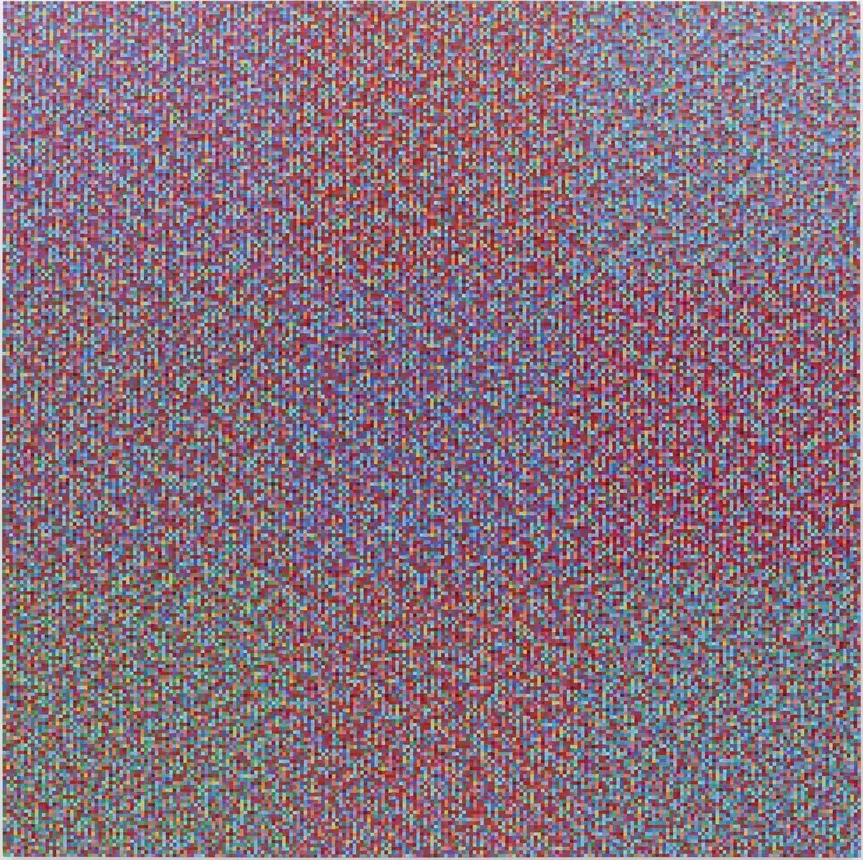
Tony Bechara (Puerto Rican, 1942–2025). Quadrant 4, 2024, acrylic on canvas, 60 x 60 in. Hand-signed by artist, signed, titled and dated verso, © Estate of Tony Bechara, Courtesy Lisson Gallery.
-

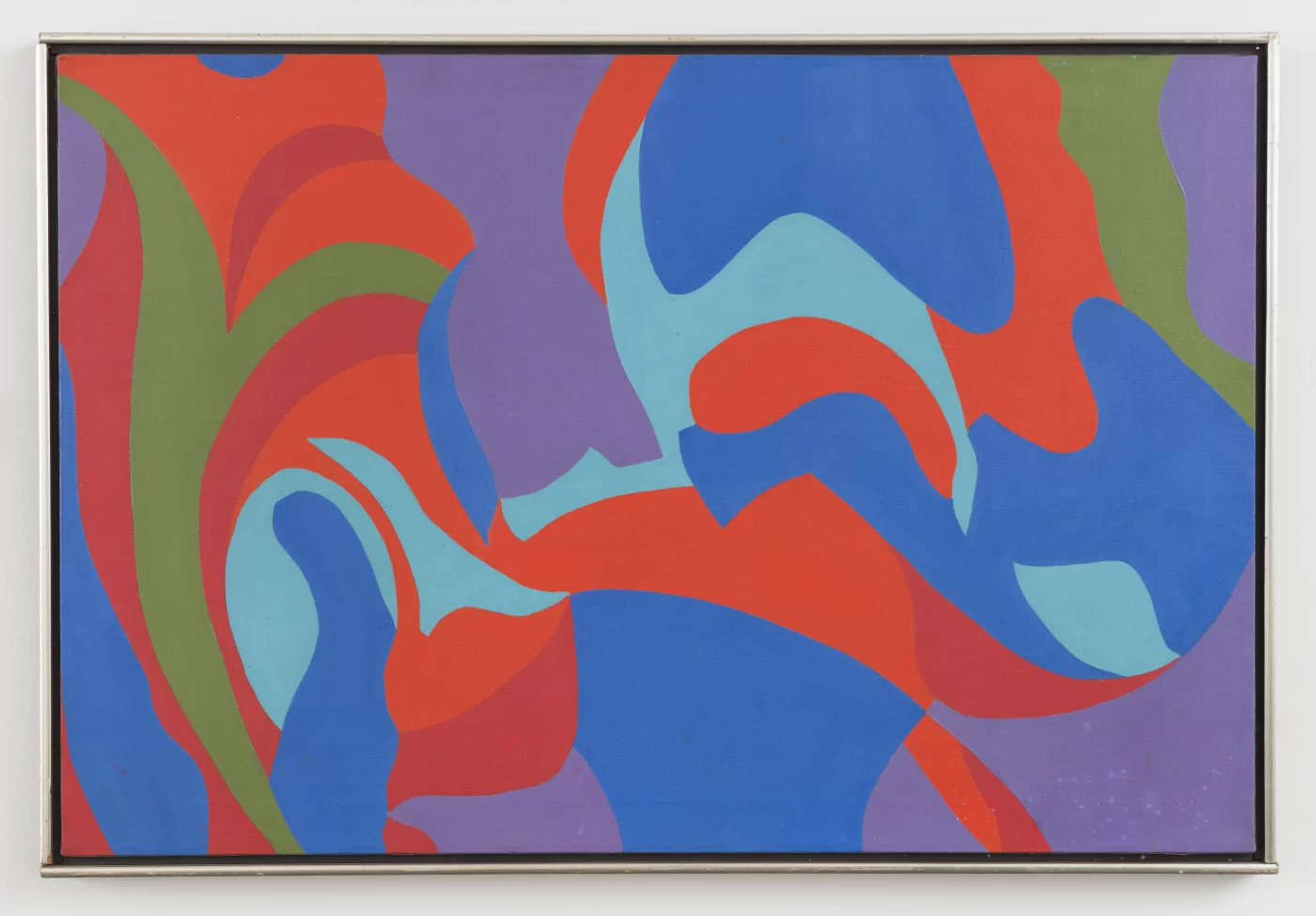
Tony Bechara (Puerto Rican, 1942–2025). Untitled, 1969, oil on canvas, 24 x 36 in. Hand-signed by artist, signed and dated verso, © Estate of Tony Bechara, Courtesy Lisson Gallery.
-

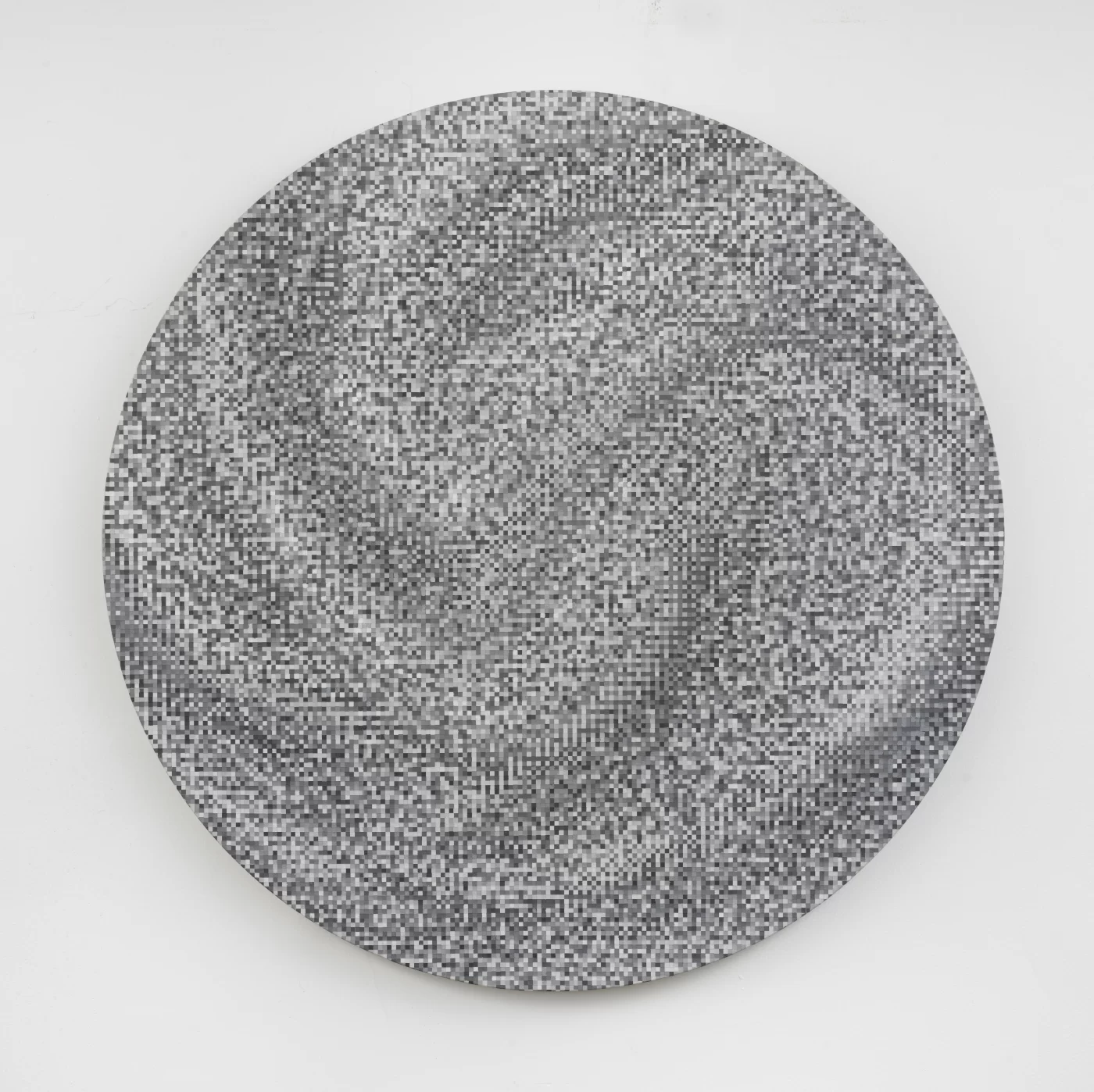
Tony Bechara (Puerto Rican, 1942–2025). Grey Tondo II, 2009, acrylic on canvas, 48 in. Hand-signed by artist, signed and dated verso, © Estate of Tony Bechara, Courtesy Lisson Gallery.
-

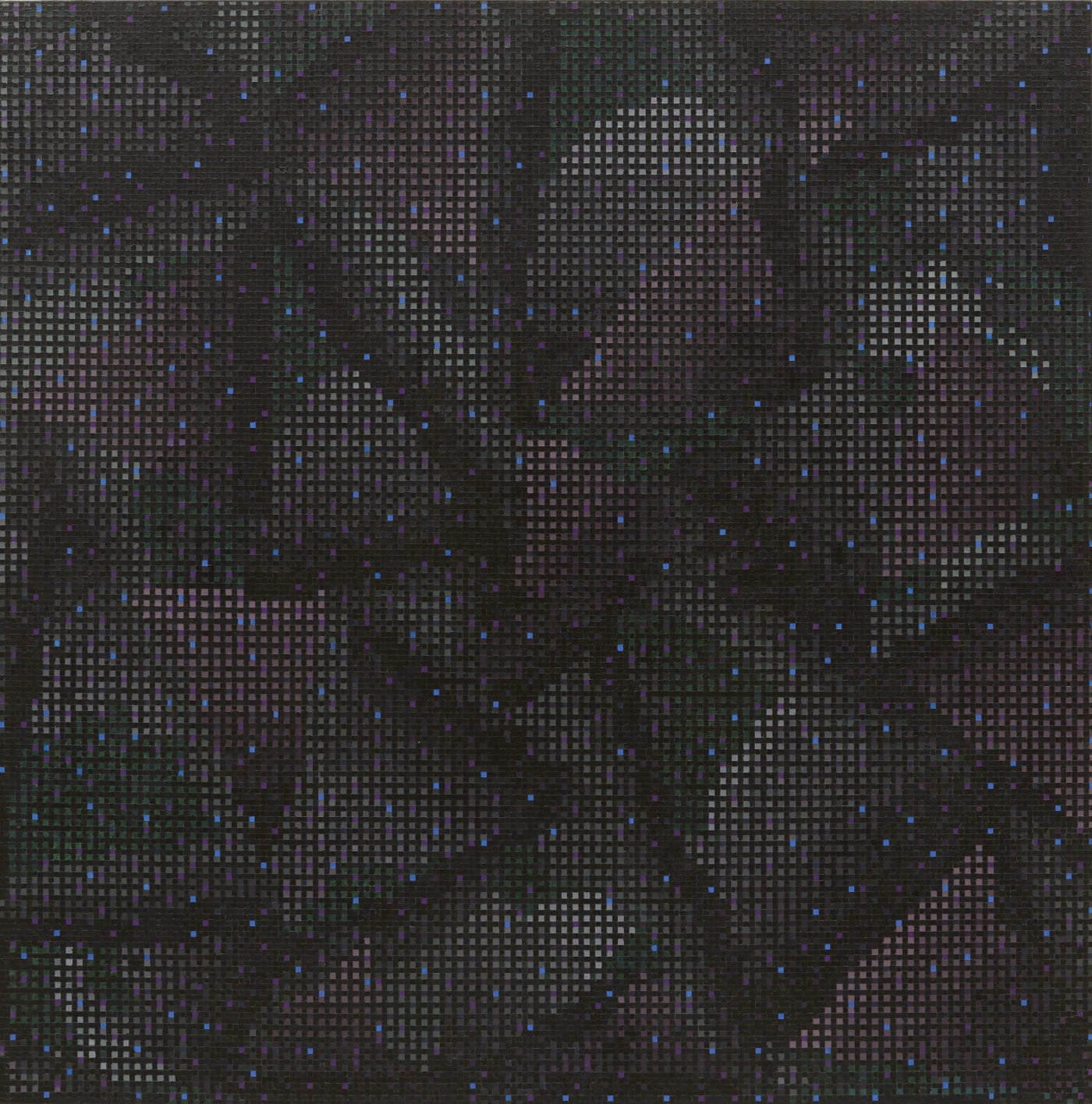
Tony Bechara (Puerto Rican, 1942–2025). Compositions in Blacks, 2015, acrylic on canvas, 48 x 48 in. Hand-signed by artist, signed and dated verso, © Estate of Tony Bechara, Courtesy Lisson Gallery.
-

Tony Bechara (Puerto Rican, 1942–2025). Color formula for "28 Colors" Series C, 2018, acrylic on paper, 5.5 x 5.5 in. © Estate of Tony Bechara, Courtesy Lisson Gallery.
-

Tony Bechara (Puerto Rican, 1942–2025). Color in Motion IV (Cube), 2024, acrylic on wood, 9.75 x 9.75 x 9.75 in. Hand-signed by artist, signed, titled and dated verso, © Estate of Tony Bechara, Courtesy Lisson Gallery.


“My work is about the experience of vision, prior to the interpretation of a specific image—I am interested in that early reaction to light as it becomes cognitive. Painting is a vehicle of light and vision first, and then symbolic and narrative.”
—Tony Bechara, 2001
Tony Bechara: An Artist of Many Worlds is the first-ever comprehensive survey of this Puerto Rican artist, including works from his later years and exploring his career-long dedication to color theory and abstraction. Born in Puerto Rico and based in New York City, Bechara (1942–2025) drew on his bilingual and bicultural upbringing, his studies in law and international relations, his long stays in Europe and the Hamptons, and his characteristic, enduring curiosity to become a man of many worlds—seeking light and illumination in far corners of the globe and across its diverse cultures.
The artist’s iconic abstract work—realized on square, circular, and triangular canvases as well as in prints and three-dimensional sculpture—deftly engages the viewer’s optics, creating compositions that seem to shimmer and vibrate. This effect stems from his fascination with pointillism and the work of French Impressionists Georges Seurat and Paul Signac. In Bechara’s practice, however, the “points”—in his case, pixels—are meticulously mapped by hand, randomized through analog mathematical formulas and calculations, and arranged to create structures in which chaos and harmony fuse into a unified composition.
Bechara’s compositional process was shaped by his first encounter with the 5th- and 6th-century Byzantine mosaics of Ravenna, Italy—an experience that inspired his methodical approach to painting through the use of an orthogonal grid. For Bechara, exploring the variations and permutations of a grid became a technique that encapsulated his interests in art history and the interplay between past and present, ultimately forming a visual language rooted in pixelation—a signature expression he developed well before the digital age, offering a prophetic vocabulary ahead of its time.
His method centered on a handmade grid is created through a four-step process of covering and superimposing masking tape directly onto the canvas. This technique enabled him to achieve a randomized color display—a “vehicle of light and vision” that brought together a unity of “order and randomness.” The resulting works provoke an experience that taps into the “symbolic” and “narrative” by offering a platform—a vibrant, chromatic strategy—for diversity and inclusion in a single gesture. An Artist of Many Worlds highlights Bechara’s harmonizing strategy as an important American expression that encourages diverse cultures and ethnicities to blend into a single, unified American culture fabric; a strategy celebrated at the Parrish on the 250th anniversary of the United States.

Tony Bechara: An Artist of Many Worlds is part of the Museum’s USA250: Life, Liberty, and the Pursuit of Happiness, a year-long program organized in response to the United States’ semiquincentennial in 2026. The USA250 exhibition series—including Bechara’s presentation—reflects on the nation’s history and founding values, examines our present moment, and imagines new ways of moving forward, while acknowledging the contributions of East End and regional artists to the broader landscape of American art and culture.
Eliciting a dialogue with the Declaration of Independence’s assertion of “the pursuit of happiness” as one of our inalienable rights, An Artist of Many Worlds proposes that Bechara’s contributions as a Latino/Hispanic artist to American culture—and his own “pursuit of happiness”—have yielded a language of both self-determination and inclusion. Bechara’s unifying pictorial strategy understood as an expression of the pursuit of happiness, offers a personal yet prophetic visual model for inclusion and collective possibility—one that strengthens the broader fabric of American art and culture.
Comprising over fifty works, this survey celebrates the accomplished artist’s evolving style across multiple media throughout his sixty-plus year career. Archival drawings, artist-made color formulas, photographs, exhibition catalogs and announcements, will accompany a detailed chronology highlighting Bechara’s illustrious life and career. This first-ever career-spanning retrospective of the artist is timed to coincide with the one-year commemoration of Bechara’s passing and will feature an independently published monograph that includes an essay by Domitille d’Orgeval, an interview between Bechara and Hans Ulrich Obrist, a detailed chronology and exhibition history, and a complete plate section.
Tony Bechara: An Artist of Many Worlds is co-organized by Mónica Ramírez-Montagut, Ph.D., Executive Director and Kaitlin Halloran, Associate Curator and Publications Manager.
Exhibition Support
The Parrish Art Museum’s programs are made possible, in part, by the New York State Council on the Arts with the support of Governor Kathy Hochul and the New York State Legislature, and by the property taxpayers from the Southampton School District and the Tuckahoe Common School District.