



-

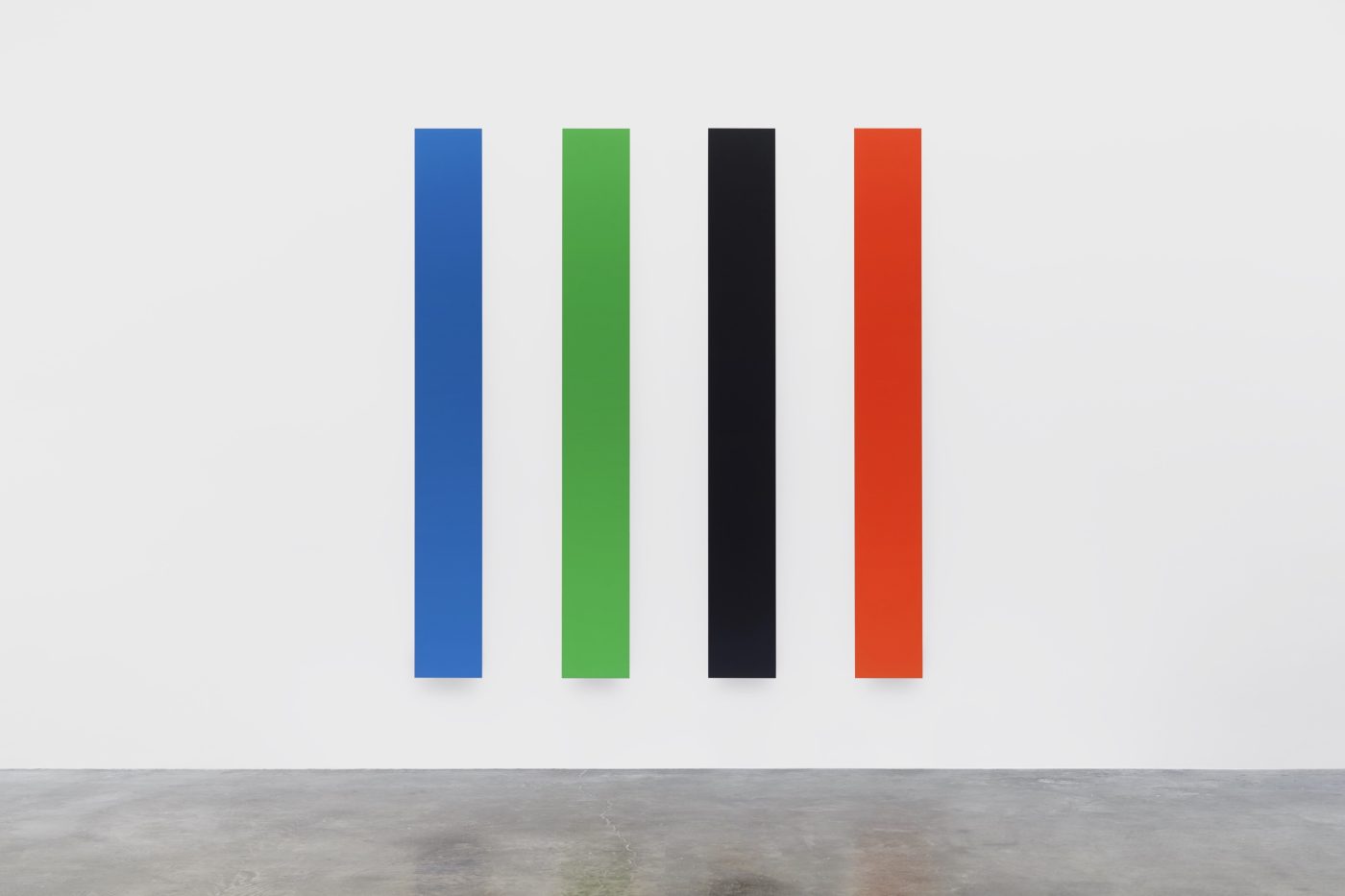
Ellsworth Kelly (American, 1923–2015). Blue Green Black Red, 1989, painted aluminum, 120 x 110 3/4 x 2 1/2 in. Ellsworth Kelly Studio. © Ellsworth Kelly Foundation.
-

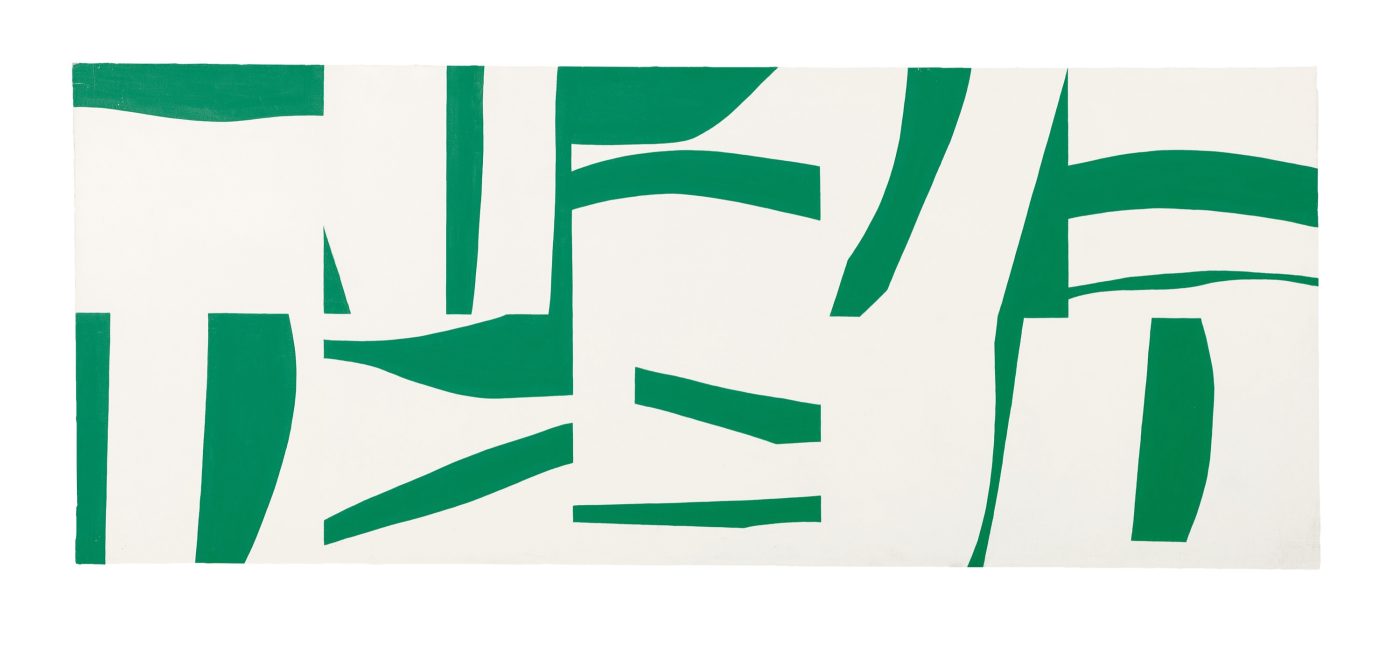
Ellsworth Kelly (American, 1923–2015). Talmont, 1951, oil on canvas, 26 x 64 1/2 in. Ellsworth Kelly Studio. © Ellsworth Kelly Foundation.
-

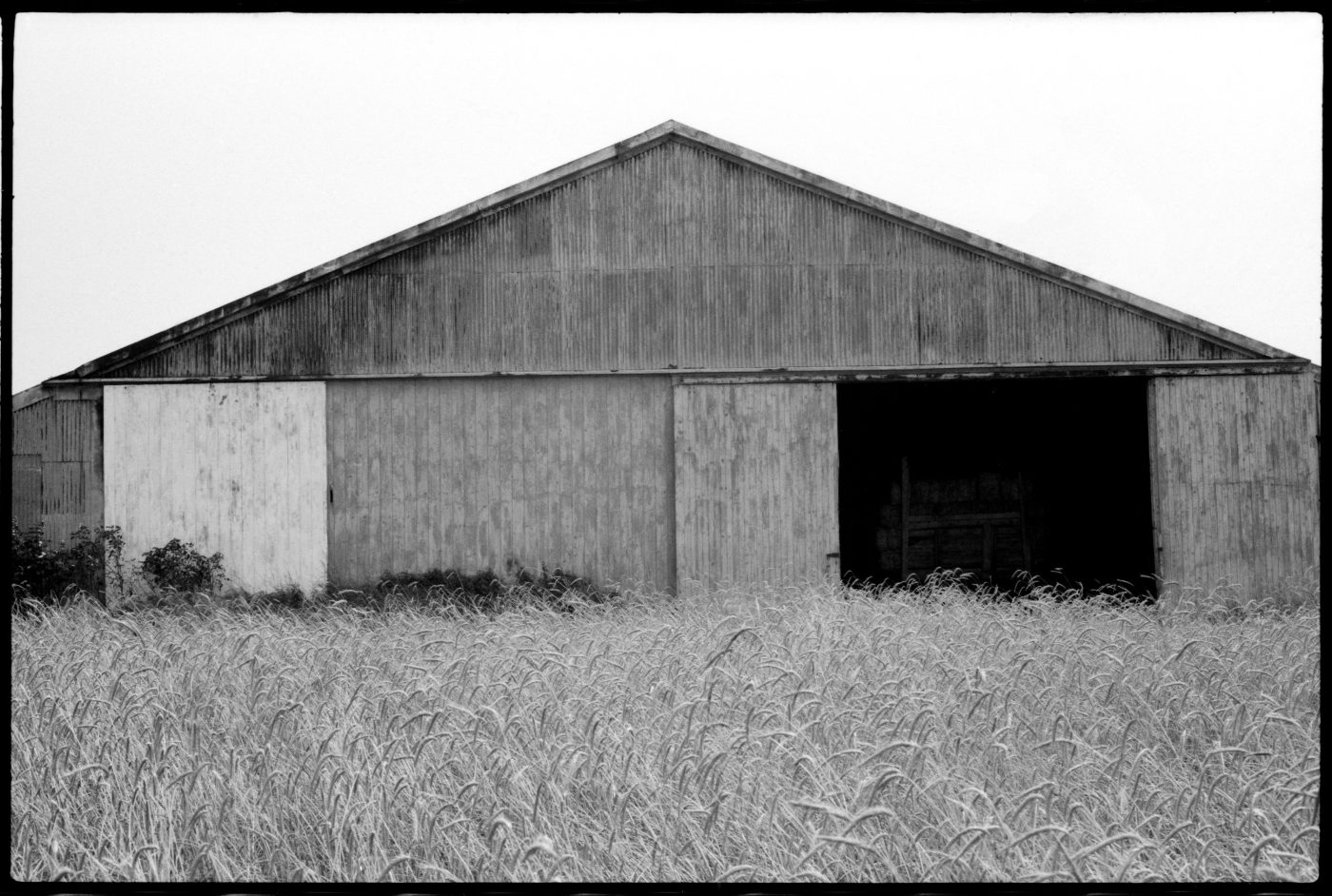
Ellsworth Kelly (American, 1923–2015). Edition of 6, 4 AP Barn, Southampton, 1968, 11 x 14 in. Ellsworth Kelly Studio. © Ellsworth Kelly Foundation.
-

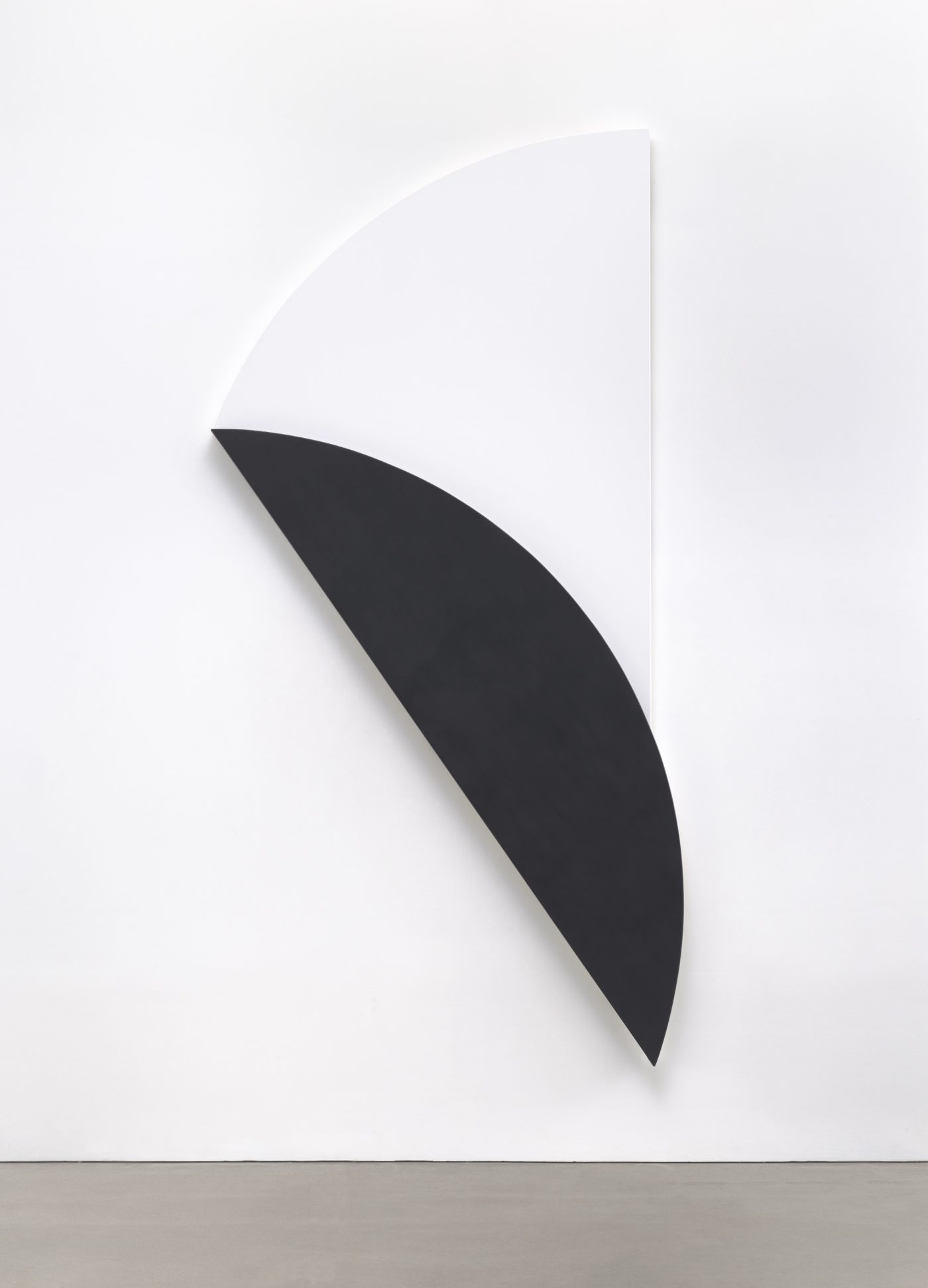
Ellsworth Kelly (American, 1923–2015). Black Relief with White, 1994, oil on canvas, two joined panels, 120 x 60 x 2 5/8 in. Ellsworth Kelly Studio. © Ellsworth Kelly Foundation.
American artist Ellsworth Kelly (1923–2015) drew his distinctive formalist language from the world around him. From his early years, he was inspired by his encounters with everyday objects: a window frame, a slab of butter, a petal’s edge—all offered fruitful studies of how the eye perceives mass and color. From his observations emerged a surprisingly diverse body of work, ranging from figurative drawings and straight photography to monochromatic canvases and abstract sculptures that distill the effects of shape, color, and light. Fascinated by the way objects shift and transform based on perception, Kelly once stated: “I want to capture some of that mystery in my work. In my paintings, I’m not inventing; my ideas come from constantly investigating how things look.”
Ellsworth Kelly: Eight Decades surveys the artist’s lifelong pursuit to represent these “elusive forms.” Comprising a selection of roughly twenty works created between the 1940s and the 2010s, the exhibition features key examples of the minimalist approach Kelly developed in his mature work alongside the artist’s early paintings, plant drawings, and photographs taken while he was on the East End of Long Island. This concentrated selection reveals how specific motifs emerged throughout his career and across various mediums, underscoring his sustained concerns with flattening form, working with negative space, and reducing color to its most elemental state. As Kelly observed towards the end of his life: “My later paintings have all the early paintings inside them.”
Ellsworth Kelly: Eight Decades is organized by the Parrish Art Museum and The FLAG Art Foundation, in collaboration with Jack Shear, President of the Ellsworth Kelly Foundation. The exhibition is curated by Scout Hutchinson, The FLAG Art Foundation Associate Curator of Contemporary Art at the Parrish Art Museum, and Jonathan Rider, FLAG’s Director, with Caroline Cassidy, FLAG’s Deputy Director.
About the Partnership
Ellsworth Kelly: Eight Decades marks the first iteration of a new curatorial partnership between The FLAG Art Foundation and the Parrish Art Museum. Between 2026 and 2030, the two organizations will collaborate on three exhibitions annually across two adjoining galleries at the Museum. This partnership builds on the recent FRESH PAINT collaboration, a rotating series of single-artwork exhibitions at the Parrish that began in June 2024. Signaling the deepening relationship between FLAG and the Parrish, this expanded partnership also marks the growth of FLAG’s commitment to supporting contemporary art practices of all forms beyond its brick-and-mortar exhibition spaces in Manhattan.
Exhibition Support
Ellsworth Kelly: Eight Decades is made possible, in part, thanks to the generous support of The FLAG Art Foundation.
The Parrish Art Museum’s programs are made possible, in part, by the New York State Council on the Arts with the support of Governor Kathy Hochul and the New York State Legislature, and by the property taxpayers from the Southampton School District and the Tuckahoe Common School District.
About Ellsworth Kelly
Ellsworth Kelly is regarded as one of the most important abstract painters, sculptors and printmakers of his time. Spanning eight decades, his career was marked by the independent route he took from any formal school or art movement and by his innovative contribution to twentieth-century painting and sculpture. Kelly drew on the connection between abstraction and nature from which he extrapolated forms and colors. From the beginning of his career, Kelly emphasized pure form and color. His impulse to suppress gesture in favor of creating spatial unity has played a pivotal role in the development of abstract art in America.
Kelly’s first one-man exhibition was at the Galerie Arnaud in Paris in 1951. His retrospective exhibitions include Ellsworth Kelly at The Museum of Modern Art in 1973; Ellsworth Kelly Recent Paintings and Sculpture at the Metropolitan Museum of Art in 1979; Ellsworth Kelly Sculpture in 1982 at the Whitney Museum of American Art and Saint Louis Art Museum; Ellsworth Kelly: A Retrospective in 1996 at the Solomon R. Guggenheim Museum, the Los Angeles County Museum of Art, the Tate, London and the Haus der Kunst in Munich; Ellsworth Kelly Sculpture at the Rijksmuseum, Amsterdam in 2021; and Ellsworth Kelly at 100 at Glenstone Museum in Potomac, Fondation Louis Vuitton in Paris, and M7 of Qatar Museums, Doha in 2023.
Recent exhibitions include Ellsworth Kelly Black and White at the Haus der Kunst and the Museum Wiesbaden; Ellsworth Kelly Plant Drawings at the Metropolitan Museum of Art, New York, the Louisiana Museum of Art, Humlebaek and the Pinakothek der Moderne, Munich; Ellsworth Kelly: Sculpture on the Wall at the Barnes Foundation, Philadelphia; Ellsworth Kelly: The Chatham Series at The Museum of Modern Art; Monet | Kelly at the Sterling and Francine Clark Art Institute, Williamstown, Massachusetts; Ellsworth Kelly Last Paintings at Matthew Marks Gallery; Form into Spirit: Ellsworth Kelly’s Austin (coinciding with the opening of the Ellsworth Kelly chapel, Austin), Blanton Museum of Art, UT Austin; Ellsworth Kelly: Black & White Works at The FLAG Art Foundation, New York; Ellsworth Kelly: Windows/Fenêtres at Musée National d’Art Moderne – Centre Georges Pompidou, Paris; and Ellsworth Kelly: Portraits at Art Institute of Chicago.
Kelly has received the Japan’s Premium Imperiale Award in 2000, Officer de la Legion d’Honneur presented by President of France Nicolas Sarkozy in 2009, and the National Medal of Arts presented by President of the United States Barack Obama in 2012.
About The FLAG Art Foundation
The FLAG Art Foundation is a non-collecting, nonprofit exhibition space that mounts solo, two-person, and thematic group exhibitions centering on emerging and established artists from around the globe. Organized by a diverse community of curators and thinkers within and beyond the art world, FLAG opened to the public in 2008 and has staged over 100 exhibitions celebrating the work of nearly 1,000 artists. Committed to providing education and resources for its surrounding community, and across New York City, all exhibitions and programs—including artist talks, artist-led workshops, and guided tours for school and museum groups—are free and open to the public.
The FLAG Art Foundation was founded by Glenn Fuhrman, an art patron and philanthropist, alongside his wife Amanda, a Co-Founder of The Fuhrman Family Foundation. Fuhrman is a Trustee of New York-Presbyterian Hospital, New York, NY; The Museum of Modern Art, New York, NY; and The Tate Americas Foundation, New York, NY; and is a Board Member of The Institute of Contemporary Art in Philadelphia, PA. He is also a Board Member of the 92nd Street Y, New York, NY, and The Central Park Conservancy, New York, NY.